


How to Care for Diabetes and Reduce the Risk of Developing It:
A Medically‑Informed Guide
Caring for diabetes—or preventing it from developing—is one of the most important steps you can take to protect your long‑term health. Medical evidence consistently shows that lifestyle changes can help prevent, delay, or significantly improve type 2 diabetes.
Below is a practical, easy‑to‑follow guide based on trusted health sources.
1. Maintain a Healthy Weight
Excess weight is one of the strongest risk factors for type 2 diabetes.
Losing 5% to 7% of body weight can reduce the risk of developing diabetes by up to 60%.
Even small weight reductions improve insulin sensitivity and blood glucose levels.
2. Increase Your Physical Activity
Regular physical activity helps:
Lower blood sugar
Improve insulin sensitivity
Support weight management
Medical recommendations include:
150 minutes per week of moderate activity (brisk walking, swimming, cycling)
Or 75 minutes of vigorous activity
Strength training twice a week
Walking 30 minutes a day can reduce diabetes risk by about 30%.
3. Follow a Balanced Eating Pattern
A healthy diet is essential for both preventing and managing diabetes.
Evidence‑based recommendations:
Prioritize vegetables, fruits, whole grains, and lean proteins
Limit added sugars and sugary drinks
Control portion sizes
Reduce saturated fats and ultra‑processed foods
Maintain consistent eating patterns to avoid glucose spikes
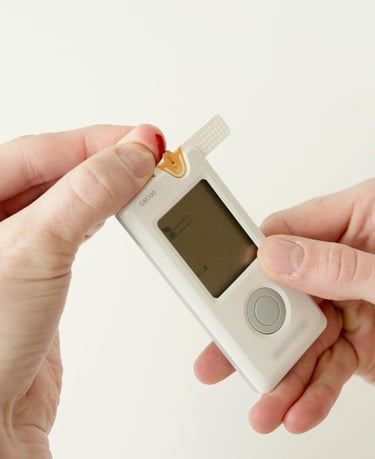
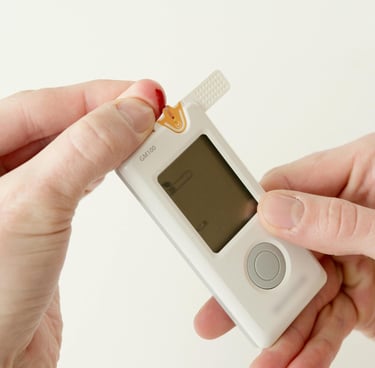
4. Monitor Your Blood Glucose Levels
If you have diabetes or prediabetes:
Follow your healthcare provider’s recommendations for regular monitoring
Adjust your eating habits and activity levels based on your results
Work with your care team to personalize your management plan
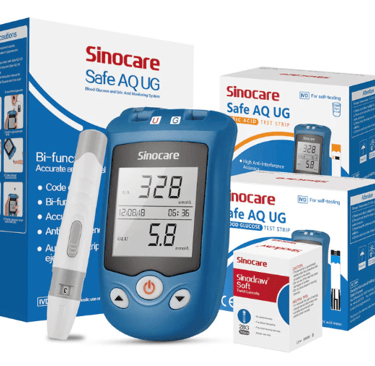
The global leader SINACORE offers you reliable, low‑cost glucose monitoring devices, combining accessible quality with technology designed for your daily well‑being
Clic on the images to view product details and offers from SINACORE.


5. Reduce Sedentary Time
Long periods of sitting increase diabetes risk.
Stand up and move every 30–60 minutes
Incorporate short activity breaks throughout the day
6. Quit Smoking
Smoking increases the risk of diabetes, heart disease, and serious complications.
Quitting improves circulation, blood pressure, and metabolic health.


7. Schedule Regular Medical Checkups
Early detection is key:
Prediabetes can often be reversed with lifestyle changes
If you have risk factors (excess weight, family history, high blood pressure, high cholesterol), ask your healthcare provider about glucose testing
8. Know Your Risk Factors
Common risk factors include:
Prediabetes
Overweight or obesity
Physical inactivity
Age over 35
Family history of diabetes
High blood pressure or high cholesterol
Previous gestational diabetes
Certain ethnic backgrounds (Latino, African American, Asian, Indigenous)
Conclusion
Type 2 diabetes is largely preventable, and if already present, it can be effectively managed with healthy habits. The essential pillars include:
Balanced nutrition
Regular physical activity
Weight management
Medical checkups
Reducing stress and sedentary time
Small, consistent changes can make a meaningful difference in your health today and in the future.
Clic on the images to view product details and offers from SINACORE.



10 Factors That Cause Blood Sugar Spikes


You check labels for hidden sugars every time you buy groceries, but why do blood sugar levels still sometimes spike noticeably? If this sounds familiar, you’re not alon
Many diabetics believe that managing blood sugar is only about the food on their plate.
The truth is far more complex. Blood sugar is a dynamic reflection of your body’s overall state, influenced by a web of interconnected factors. Understanding why a blood sugar spike occurs is the key to finding true stability.
What is a Blood Sugar Spike?
A blood sugar spike refers to a sharp increase in blood glucose levels within a brief time. Some increase after eating is normal, especially after carbohydrate intake.
However, abnormal spikes occur when glucose rises too high or remains elevated for too long, usually defined as exceeding the blood glucose control targets for diabetics:
Pre-meal: Blood glucose levels between 4 to 7 mmol/L for type 1 or type 2 diabetics.
2 hours after a meal: Blood glucose below 9 mmol/L for type 1 diabetics, and below 8.5 mmol/L for type 2 diabetics. [1]
There are also differences between short-term spikes and chronic high blood sugar.
Short-term glucose spikes usually happen after meals and may return to normal within hours.
Chronic high blood sugar, on the other hand, means glucose levels stay elevated consistently, often due to insulin resistance or inadequate insulin production. Over time, repeated blood sugar fluctuations damage blood vessels, nerves, kidneys, and eyes, increasing the risk of long-term complications.
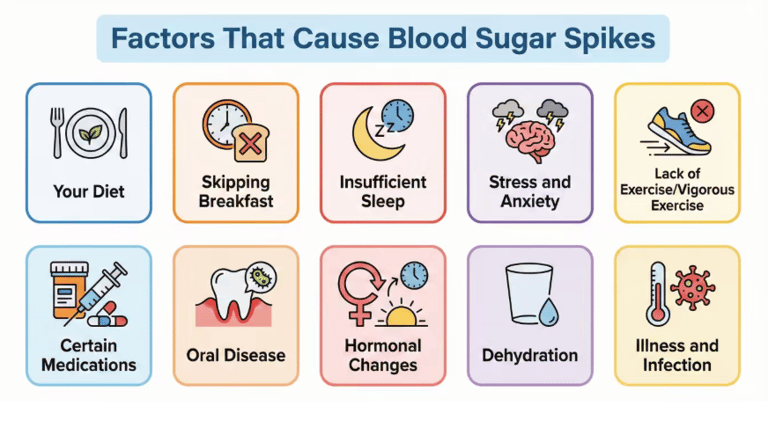
Transitioning from reactive care to proactive management requires looking at the most common triggers.
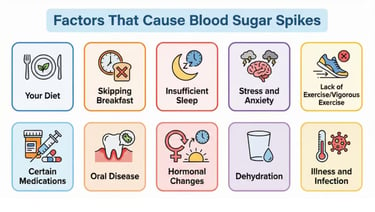
1. Your Diet
Diet is the most direct contributor to a blood sugar spike.
High Carbohydrate Intake: Consuming large amounts of refined carbohydrates (such as white bread, noodles, cakes) and high-glycemic index (GI) foods leads to rapid digestion and absorption, converting into glucose that enters the bloodstream and causing a sharp post-meal glucose spike.
Sugary Beverages and Snacks: Fruit juices, sodas, drinks, and various snacks with added sugars can also trigger rapid and significant blood sugar spikes.
Unbalanced Diet Structure: A meal lacking sufficient dietary fiber (from vegetables, whole grains), high-quality protein, and healthy fats to slow down carbohydrate absorption can result in fast blood sugar rises.
2. Skipping Breakfast
It seems logical that eating less is a good way to cut calories, but skipping breakfast is a major factor in what causes elevated blood sugar later in the day.
When the body goes too long without food, insulin sensitivity decreases. As a result, blood sugar levels after lunch and dinner may rise higher than expected.
By starting your day with fiber and protein, you prime your metabolism to handle glucose more efficiently throughout the day.
3. Insufficient Sleep
Sleep is not just rest for the brain; it is a critical metabolic process. When you don’t get enough quality sleep (typically less than 7 hours for most adults), your body’s hormonal balance is disrupted. Levels of cortisol rise, which tells your liver to release stored glucose for energy. At the same time, sleep deprivation can make your cells more resistant to insulin.
Prioritizing a consistent sleep schedule is as important to your treatment plan as your medication.
4. Stress and Anxiety
Can stress increase sugar levels? Yes. When you’re stressed, whether from work, relationships, or traffic, your body goes into "fight-or-flight" mode. This can lead to the release of adrenaline and cortisol. [2]
These hormones signal the liver to release stored glucose into the blood. For someone with a healthy insulin response, the body manages this. However, for those with diabetes, this extra glucose lingers, resulting in a persistent blood sugar spike.
Learning to manage stress is a vital, non-dietary way to prevent glucose spikes.
5. Lack of Exercise/ Vigorous Exercise
Physical activity is a powerful glucose regulator. It helps your muscles use sugar for energy and improves insulin sensitivity. A sedentary lifestyle means missing out on this natural buffering system.
On the flip side, very intense exercise, like heavy weightlifting or competitive sprinting, can actually cause a short-term blood sugar spike due to a stress hormone release, before it eventually lowers levels.
Ideal exercises for diabetics include walking, yoga, swimming, light housework, etc. These are low-impact, moderate exercises.


6. Certain Medications
Some medicines can trigger blood sugar fluctuations by interfering with insulin, increasing glucose production, or affecting the body's utilization of sugar. For example:
Corticosteroids: Used to treat asthma or inflammation, these can cause immediate glucose spikes.
Diuretics: Often used for high blood pressure, some can lead to potassium loss, which affects insulin secretion.
Beta-blockers: While essential for heart health, they can occasionally mask the symptoms of low blood sugar or slightly raise glucose levels.
Statins: Used to lower cholesterol.
Remember to consult your healthcare provider before changing your regimen, but be aware that these drugs are often what causes elevated blood sugar in patients who are otherwise doing everything right.
Clic on the images to view product details and offers from SINACORE.


